Protection & rehabilitation of surface water springs

Damiens’ Hope Foundation (DHF) has its presence in Northern Uganda and in Kenya (Migori County, Homa Bay County, Kisumu County and Nairobi County). Our programs target the vulnerable populations through a number of projects such as surface water rehabilitation and protection, mental health and wellness, entrepreneurship through MSMEs, Sand mine rehabilitation targeting revival of damaged ecosystems and natural habitats, aquaculture, and young men and women empowerment through sports among others.

We protect spring sources from contamination!

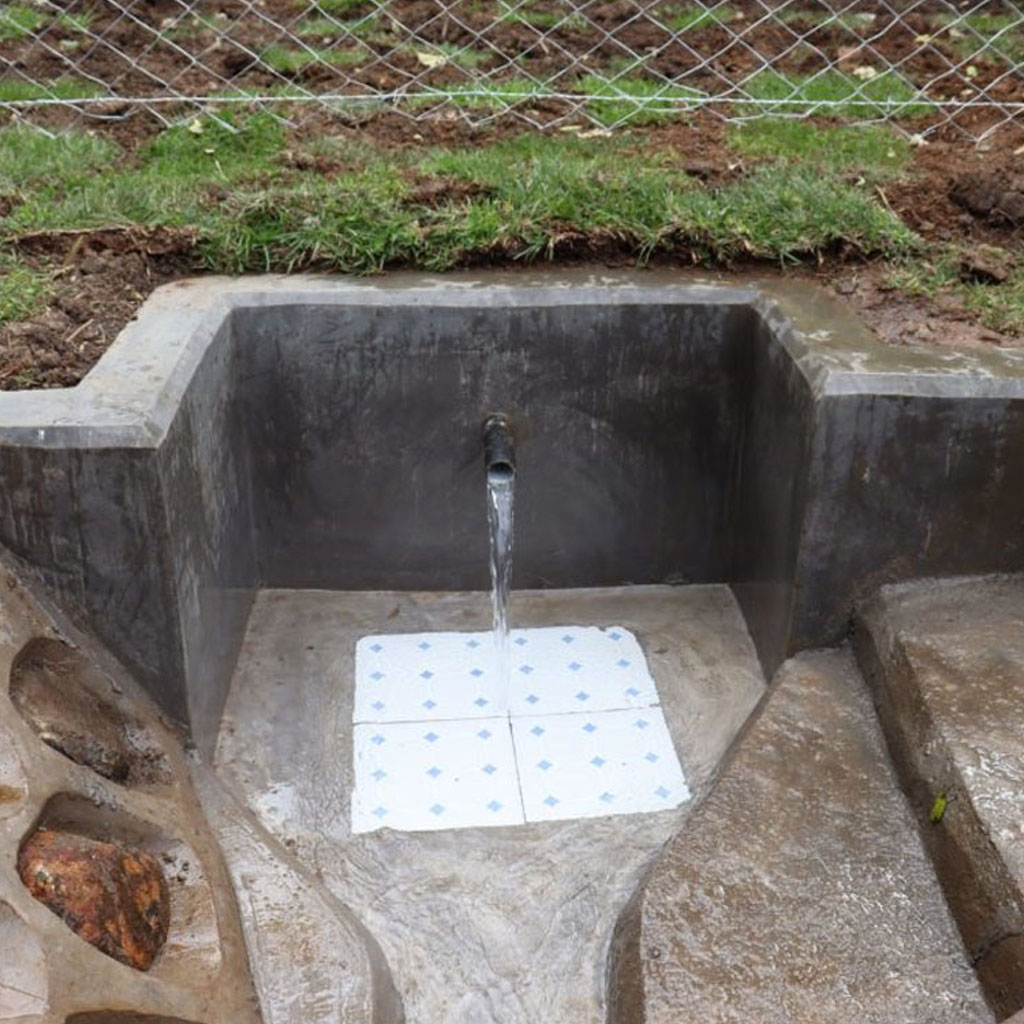
Springs are water sources that come from deep underground, where the water is filtered through natural layers until it is clean enough to drink. Once the water pushes through the surface of the Earth, however, outside elements like waste and runoff can contaminate the water quickly. At Damiens’ Hope Foundation (DHF) We protect spring sources from contamination with a simple waterproof cement structure surrounding layers of clay, stone, and soil. This construction channels the spring’s water through a discharge pipe, making water collection easier, faster, and cleaner. Each spring protection also includes a chlorine dispenser at the waterpoint so community members can be assured that the water they are drinking is entirely safe.
To establish a protected catchment area, we build a fence and dig a drainage channel about 10m uphill from the eye of the spring. If there are any sources of contamination on the ground uphill from the spring (e.g animal waste, or a farm using pesticides), water can wash those contaminants downhill. The drainage channel, or diversion channel, is like a moat that diverts any surface water running down the hill away from the spring. The fence also ensures that no humans or animals can access and cause contamination in the area that feeds directly into the spring water.
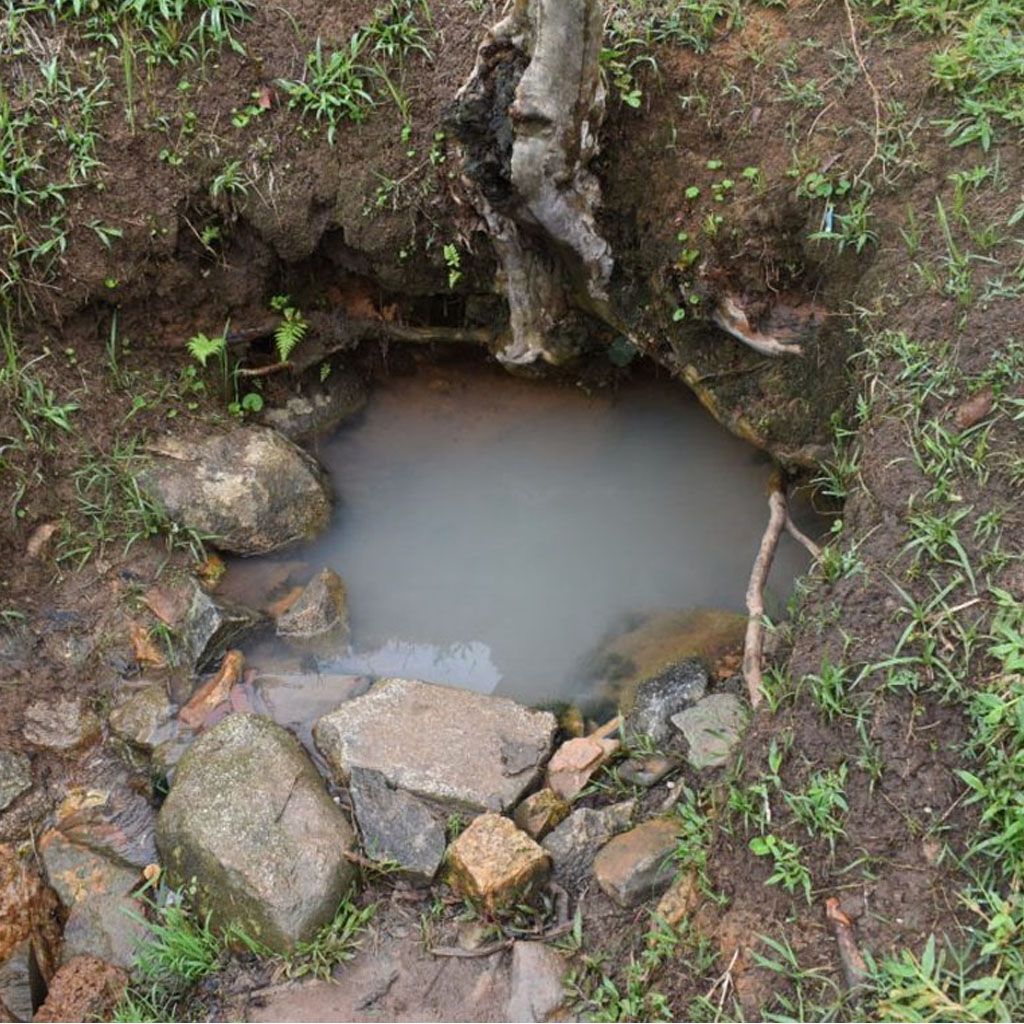
Next, we dig down to the eye of the spring and build infrastructure that allows the spring water to flow through a delivery pipe that is elevated off the ground. Many natural, unprotected springs accumulate in small pools at the ground surface, where people fetch water by submerging their water collection containers into the water. This leaves the water exposed to all types of contamination, and may even cause sickness for the people who have to wade into the pool to collect water. The Water Project also installs a floor beneath the pipe and stairs to allow people to access the delivery pipe more easily. By installing the delivery pipe and surrounding infrastructure, the water becomes more accessible and safer to access.
Finally, we install a chlorine dispenser at every spring we protect. While the ground naturally filters spring water, the water quality is not always perfect. In order to ensure that the water is clean by the time people are drinking it, we ensure each spring has a chlorine dispenser and the community is taught about how to use the chlorine to clean their containers and treat their water.
Globally, 1 in 9 people still have no access to clean water. But in the communities, we serve, it's 9 out of 9. Water is a daily and crippling challenge. Without water you can't grow food, you can't build housing, you can't stay healthy, you can't stay in school and you can't keep working. Today, hope is on hold in over half of the developing world's primary schools without access to water and sanitation. But the water crisis can be solved. Every good thing made possible by access to safe water depends on it being available every day - year after year. Sadly, the promise of safe water has been broken many times in the past and even still today, by otherwise well-intentioned groups. Faulty and abandoned pumps are almost expected in many places in Kenya

get involved

Globally, 1 in 9 people still have no access to clean water. But in the communities, we serve, it's 9 out of 9

Our partners